

Ultimate Guide to Visiting Crete - Flights, Hotels, Tips
Getting There: Flights & Ferries
Crete is exceptionally well-connected, but choosing your point of entry is key to your itinerary.
Choosing Your Airport
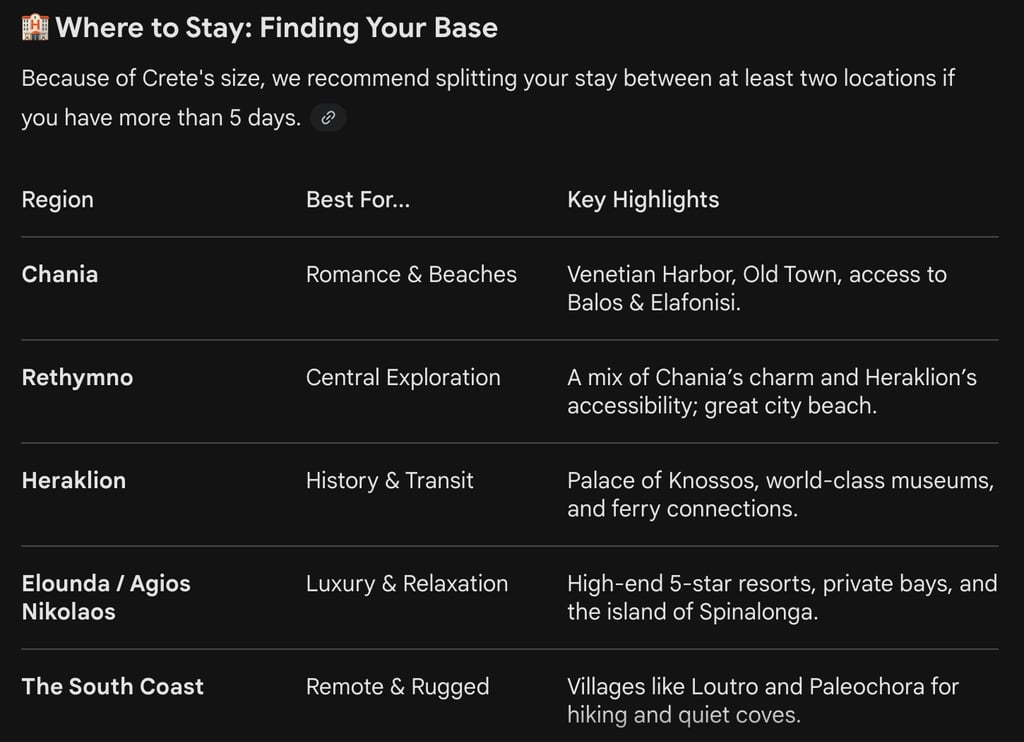
Heraklion International (HER): The busiest hub, located in central Crete. Ideal if you are visiting the Palace of Knossos or staying in the luxury resorts of Elounda and Hersonissos.
Chania International (CHQ): Located in the west. This is the preferred entry point for those wanting to explore the Venetian Old Town of Chania or the famous western beaches.
Sitia Public Airport (JSH): A smaller airport in the far east, primarily serving domestic flights from Athens.
Arriving by Sea
Daily high-speed and overnight ferries connect the ports of Heraklion, Chania (Souda), and Rethymno to Athens (Piraeus).
In the summer months, Crete is a major hub for island-hopping to Santorini, Mykonos, and the Cyclades.
Getting Around: The Car Rental Essential
To truly see Crete, renting a car is highly recommended. While the KTEL bus network connects major cities effectively, it does not reach many of the island’s most iconic beaches and mountain villages.
Driving Style: Cretan drivers are generally helpful, but expect narrow, winding mountain roads.
The "Hard Shoulder" Rule: On the national road (VOAK), it is local custom to drive partially on the paved shoulder to allow faster vehicles to pass.
Booking Tip: Use DiscoverCars or local agencies like AutoWay to compare rates. Book early for July and August!
Top 5 Things to Do
Hike the Samaria Gorge: One of Europe’s longest canyons, ending at the Libyan Sea.
Visit the Palace of Knossos: The center of the Minoan civilization and the legendary Labyrinth of the Minotaur.
Wade through Elafonisi: Famous for its pink-tinted sand and shallow turquoise waters.
Explore Chania Old Town: Get lost in the Venetian and Ottoman backstreets.
Taste the "Dakos": Try the local barley rusk topped with tomato, mizithra cheese, and Cretan olive oil.
Practical Travel Tips for 2026
The Climate Resilience Tax: Be aware that Greece has a daily tax on stays, ranging from €0.50 to €15.00 per night depending on your accommodation’s star rating.
Tap Water: While safe in major cities like Heraklion and Chania, bottled water is generally preferred in remote villages.
Sun Protection: The Cretan sun is intense even in May and October. Always carry high-SPF sunscreen.
Seasonality: May-June and September-October are the "Golden Months"—warm enough for swimming but cool enough for hiking without the crowds.
Plan Your Full Itinerary
Maximize your time on the island with our dedicated tools:
Digital Nomad Cost of Living Calculator: Thinking of working from Chania? Calculate your monthly budget here.
Custom Travel Itinerary Generator: Get a day-by-day plan for a 7-day or 14-day trip across Crete.
Local History Diaries: Read about the resistance of the Arkadi Monastery and the secrets of the Venetian forts.
Discover Thessaloniki With a Game: Traveling through mainland Greece? Try our interactive city game.