

Nomad vs Traditional Travel: Which Is Cheaper in 2026?
Is digital nomad life cheaper than traditional travel in 2026? We break down accommodation, transport, food, visas, and hidden costs to help you decide.
DIGITAL NOMAD TIPS
Zoi Kotsou
1/18/20263 min read

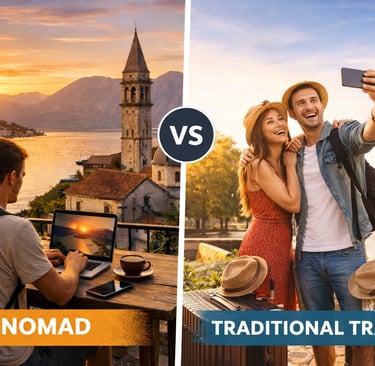
In 2026, more people are questioning the true cost of travel. Is it cheaper to live as a digital nomad for months at a time — or to take shorter, traditional vacations?
With remote work more accessible than ever, the line between “travel” and “living abroad” has blurred. But when it comes to your wallet, which lifestyle actually wins?
Let’s break down the real numbers.
What’s the Difference?
Before comparing costs, it’s important to define both approaches.
Traditional Travel
1–3 week trips
Hotels or short-term rentals
Tourist-focused activities
Frequent flights
Eating out daily
Digital Nomad Lifestyle
1–6+ months per destination
Monthly apartment rentals
Local grocery shopping
Coworking or café work
Slower travel pace
The key difference? Time. And time dramatically impacts cost.
1. Accommodation Costs
Accommodation is usually the biggest expense in both styles of travel.
Traditional Travel
Hotels in major European cities like Paris, Rome, or Amsterdam can range from €120–€300 per night in 2026.
Even mid-range stays quickly add up:
€180 x 14 nights = €2,520 for two weeks
Digital Nomad Life
Monthly rentals drastically reduce costs. In emerging cities like Tbilisi, Tirana, or Budapest:
Studio apartment: €600–€1,100 per month
Utilities + Wi-Fi: Often included
When spread across 30 days, daily housing costs drop significantly.
Winner: Digital nomad lifestyle (for stays longer than 3–4 weeks)
2. Transportation Expenses
Traditional Travel
Short trips often mean:
Round-trip flights
Airport transfers
Trains between cities
Ride-sharing apps
A 2-week multi-city European trip can easily include:
€250–€600 flights
€150–€300 trains
€100+ local transport
Fast-paced itineraries cost more.
Digital Nomad Travel
Nomads move more slowly, often changing cities every 2–3 months. Fewer flights mean lower transport costs over time.
Many base themselves in walkable cities like Valencia or Kraków, minimising daily transport expenses.
Winner: Digital nomad lifestyle (if you travel slowly)
3. Food & Dining
Food habits are a major cost differentiator.
Traditional Travel
Eating out 2–3 times daily:
Breakfast café: €8–€15
Lunch: €15–€25
Dinner: €20–€40
Daily total: €45–€80
Two weeks: €630–€1,120
Digital Nomad Lifestyle
Nomads typically:
Cook 60–70% of meals
Shop at local markets
Reserve dining out for weekends
Monthly groceries in cities like Bucharest or Vilnius can range from €150–€300.
Even with regular dining out, food expenses remain significantly lower than full-time tourist dining.
Winner: Digital nomad lifestyle
4. Activities & Entertainment
Traditional travellers often:
Book guided tours
Visit paid attractions
Take day trips
Purchase city passes
A typical 2-week itinerary in cities like Barcelona may include €300–€600 in tours and attraction tickets.
Digital nomads, by contrast:
Explore free local events
Visit fewer paid attractions
Integrate into daily life
They spread entertainment costs over a longer period.
Winner: Digital nomad lifestyle
5. Visa & Administrative Costs
Here’s where things shift slightly.
Traditional tourists typically enter Europe under Schengen tourist rules (up to 90 days).
Digital nomads often apply for special visas, such as those offered by Portugal, Spain, or Croatia.
Costs can include:
Application fees (€75–€300)
Health insurance
Income documentation
However, these are usually annual or long-term expenses.
Winner: Traditional travel (for short trips)
👉 Full breakdown: https://local-diaries.com/europe-digital-nomad-visas-guide
6. Opportunity Cost: Income vs Vacation Time
This is the most overlooked factor.
Traditional travel often means:
Taking unpaid leave
Using limited vacation days
No income during travel
Digital nomads:
Continue earning while abroad
Offset living costs with remote income
Even if monthly expenses are similar, earning while abroad dramatically shifts the financial equation.
Winner: Digital nomad lifestyle (for remote workers)
Sample Cost Comparison (2026 Estimate)
Two-Week Traditional Trip in Western Europe
Flights: €450
Accommodation: €2,520
Food: €900
Transport & activities: €600
Total: €4,470
One Month as a Digital Nomad in Eastern Europe
Apartment: €900
Food: €300
Transport: €80
Coworking + extras: €150
Total: €1,430
Even accounting for slower travel and occasional flights, long-term nomad living often proves more economical per day.
So, Which Is Cheaper in 2026?
Traditional Travel Is Cheaper If:
You travel once or twice per year
Trips are short (under 2 weeks)
You prefer convenience over cost optimization
Digital Nomad Life Is Cheaper If:
You stay 1+ months per location
You cook regularly
You minimize frequent flights
You earn remotely
In most scenarios, slow digital nomad living is significantly cheaper per month than repeated short vacations.